
A Look Ahead – October 2025
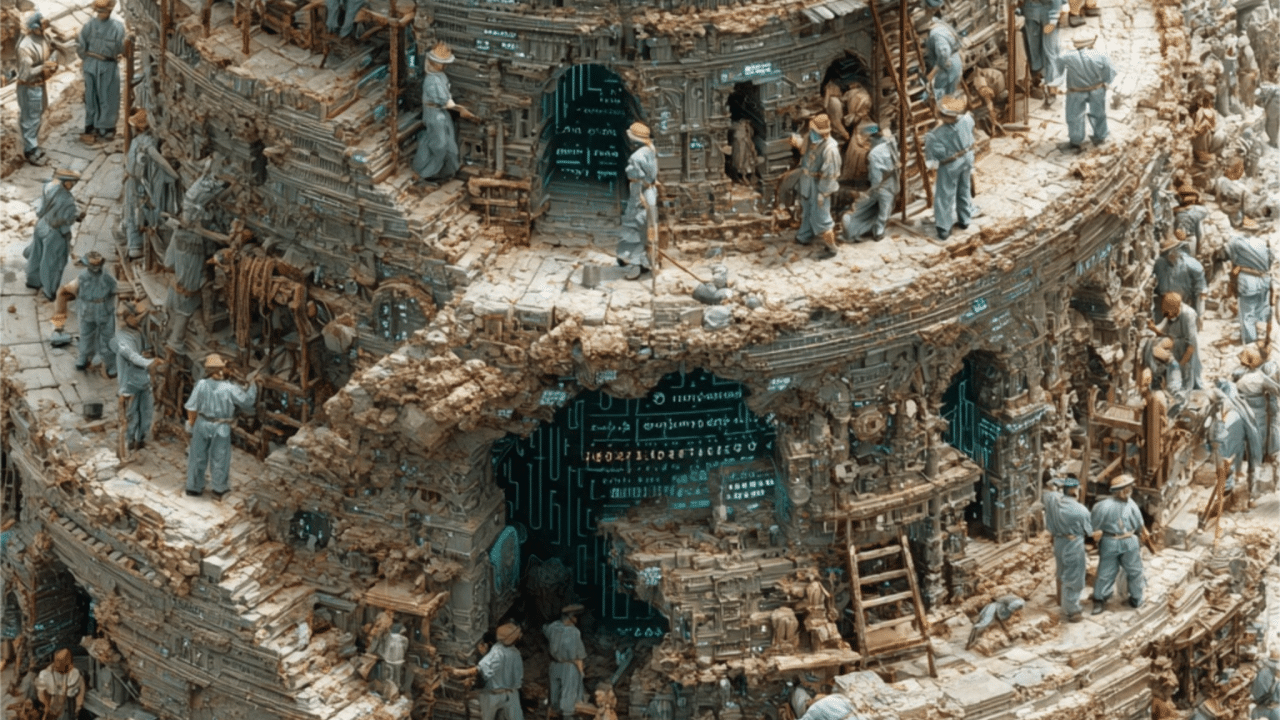
Since the dawn of time, humanity has dreamed of a universal language. According to the mythological story of the Tower of Babel, as recounted in the Bible, God scattered humanity by giving them different languages so that they could no longer understand one another and thus could not complete their ambitious project. Ever since, this founding myth has haunted our collective imagination: what if, one day, we could once again understand one another without barriers?
With the rapid rise of artificial intelligence, this dream now seems within reach. Instant translation earbuds, smart glasses, and real-time subtitles: we have never been closer to “mending Babel.”
But one question remains: Will AI truly enable humanity to complete its Tower of Babel… or does it risk trapping us in an illusion of communication?
Because speaking a language isn’t just about decoding words. It’s about immersing oneself in a culture, a way of thinking, and human relationships—something that AI, no matter how powerful it may be, cannot fully replicate.
This is where foreign language education—and French as a foreign language (FLE) in particular—stands today: caught between technological promise and human necessity.
Another attempt to overcome the Tower of Babel emerged in the 19th century: Esperanto. Conceived by Ludwik Zamenhof, this artificial language was intended to be simple, neutral, and universal, with the aim of breaking down barriers between peoples. But despite the beauty of its ideal, it never gained the necessary momentum. Why? Because a language is not merely a set of grammatical rules: it is carried by a culture, a history, and a living community. Esperanto, lacking cultural roots, remained a marginal initiative.
Today, artificial intelligence promises to achieve what Esperanto failed to do: provide universal communication. But the parallel is illuminating. Like Esperanto in the past, AI risks creating an illusion of unity: understanding words without truly sharing the imagination, the references, and the cultural nuances that make a language rich.
We could draw an illuminating parallel with currency. The introduction of the euro was hailed for its simplicity: no more tedious conversions, smoother trade, and a symbol of European unity. But for many, it also represented a loss: that of monetary sovereignty, of a national symbol, and sometimes even of a part of their cultural identity. What would happen if a universal language were to become established thanks to AI? The practical benefits would be undeniable: traveling, working, and trading without barriers. But the price to pay could be immense: the gradual disappearance of languages as vehicles of fundamental power—culture, identity, sovereignty. Is humanity ready to sacrifice this pluralistic richness in the name of efficiency?
The Future of Foreign Languages: Is It Still Worth Learning in the Age of AI?
Never before has language learning seemed both so necessary… and so widely questioned.
- On the one hand, artificial intelligence promises us instant, seamless, and effortless translation: earbuds, smart glasses, instant translators, and automatic real-time subtitles.
- On the other hand, millions of people continue to invest time and energy in language courses, apps, or language study trips.
So, looking ahead three years, how do we envision the future of foreign languages—and specifically that of FLE (French as a Foreign Language)?
The Current State of Affairs: A Market in Flux
Language learning is a massive industry: e-learning platforms, apps, private lessons, and certifications. The market is booming, but practices are changing rapidly:
- micro-learning via TikTok, podcasts, YouTube,
- AI chatbots available 24/7,
- the convergence of in-person classes and digital tools.
FLE, on the other hand, is still characterized by a very academic approach, often focused on grammar and writing. This is an asset for some, but a limitation in a world where immersion and practice have become central.
Innovations that are changing everything
AI has already been a game-changer:
- instant and increasingly seamless translation,
- chatbots capable of holding a natural conversation,
- personalized learning, tailored to individual profiles and goals,
- level tests and automated grading.
One thing is clear: if everything can be translated automatically, why bother learning a language?
Two opposing views
- Techno-deterministic view: humans will no longer need to learn; machines will do everything.
- A humanistic perspective: a language is not just a code; it is a culture, an identity, and a way of thinking.
French is a good example of this. Learning French as a foreign language isn’t just about mastering grammatical rules; it’s about gaining access to a culture, a sensibility, and a way of life that AI cannot replicate.
What AI Won't Replace
- The cultural and intercultural dimension (humor, implicit meaning, gestures, references).
- Human relations (motivation, interaction, group dynamics).
- Linguistic creativity (playing with words, inventing, making a language one’s own). The teacher’s role as a guide and cultural mediator, going far beyond that of a mere transmitter of rules.
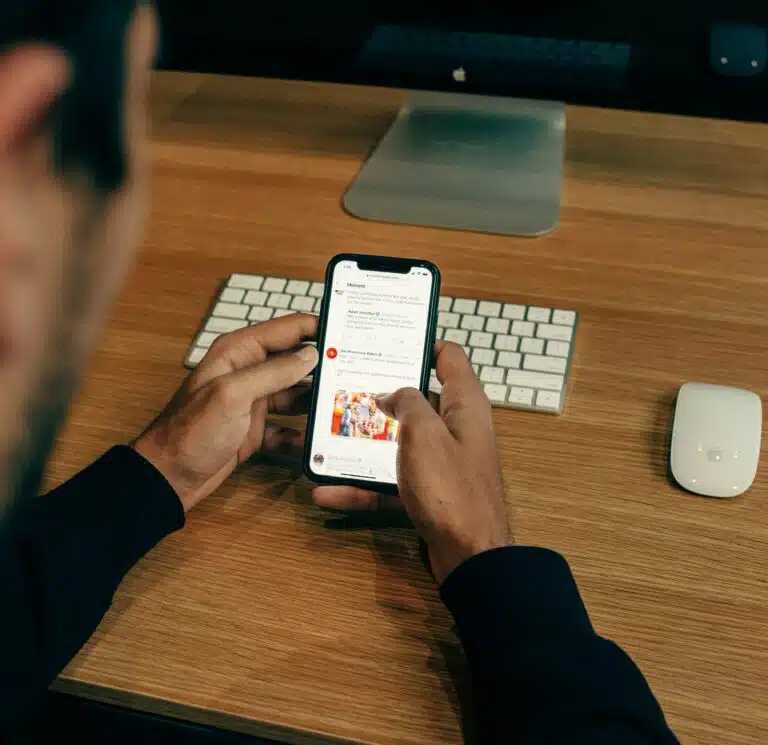
Above all, AI will not lead to greater personal independence. Humanity’s submission to machines—particularly through the cell phone, which has gradually crept into our lives under the guise of enhancing the human experience—raises serious questions. Yes, it raises questions about independence, and I would even go so far as to say about human sovereignty. Humans are losing their own sovereignty by entrusting more and more decisions to machines.
- Good for some people (the very ones willing to accept the idea of having a chip implanted in their brains to enhance their abilities);
- Catastrophic for others (the very same people undergoing digital detox programs), a divide is emerging here as well.
I’m not judging anyone; it’s just a fact.
The fact remains that learning a language serves as a bulwark, a shield, and a stronghold against technology’s growing dominance over humanity. Entrusting our social and multicultural interactions to machines seems like a Rubicon that humanity is not yet ready to cross.
Because, really, who can guarantee the accuracy of the translation of your words (and your writings) and those of the people you’re talking to? No one. In the worst-case scenario, humans will become mere “terminals” exploited to convey whatever message someone wants them to say or convey.
3-Year Outlook
In the coming years, we can expect:
- a decline in overly prescriptive and rigid approaches,
- a shift in teachers' roles to that of coaches and facilitators,
- a widespread adoption of hybrid approaches: AI for day-to-day operations, humans for the cultural and relational aspects,
- a greater emphasis on immersive experiences, creativity, and intercultural understanding.
For French as a foreign language (FLE), the challenge is clear: to reinvent itself not in opposition to AI, but alongside it. At the very least, we need to give this serious thought.
Conclusion
Artificial intelligence does not spell the end of language learning. It is reshaping it.
The real question isn't: " Should I learn another language? ” but rather: “ Why and how should we learn differently? "
Because while AI helps us understand, only humans can teach us how to truly live a language.
Ultimately, the stories of Babel, Esperanto, and AI all teach us the same lesson: humanity has never stopped dreaming of a universal language. But every attempt comes up against an inescapable truth: speaking a language is always about much more than simply understanding one another. It means immersing oneself in a culture, sharing a worldview, and entering into human relationships.
AI, like Esperanto in its day, can break down technical barriers. But it will never replace the living, embodied nature of languages. In the future, the teaching of French as a foreign language (FLE) and other languages must be based on this reality: not to fight against the machine, but to complement it, by conveying what AI can never translate—culture, imagination, and the art of living.
Perhaps, rather than completing the Tower of Babel, AI invites us to reinvent it: not as a single tower, but as a constellation of interconnected languages, where diversity remains a source of richness, and where learning remains a profoundly human act.
Too French is set to launch its “ Augmented FLE Education ," which aims to provide concrete solutions to a French as a Foreign Language (FLE) market that, like the foreign language sector as a whole, is set to undergo major upheavals in the coming years.