Would you like to learn French in an authentic and engaging way? Discover the fascinating secrets hidden behind the expressions you use every day! These idioms are much more than just a linguistic tool: they are the keys to a profound transformation in your command of French.
According to an exclusive article in the newspaper Le Monde, some French expressions are so old that we have forgotten their original meaning. On our French learning platform, TooFrench, we believe thatlearning French also involves understanding these linguistic treasures that make up the richness of Molière’s language.
1. “Faire bonne chère”: the welcome before the feast
Modern meaning
Today, when we say “faire bonne chère,” we mean enjoying an excellent meal or indulging in a hearty and delicious feast. We use this phrase to describe an unforgettable culinary experience, often on special occasions or at a restaurant.
Examples of contemporary use:
- “We had a wonderful meal at this Michelin-starred restaurant”
- "The holiday season is a time to enjoy good food with family"
- "He enjoys fine dining and discovering new, sophisticated dishes"
The surprising origin
A fascinating fact: contrary to what you might think, this expression isn’t spelled “faire bonne chair” like in “sausage meat”!
The origin of this expression dates back to the 14th century. The word “chère” comes from the Latin “cara,” meaning “face.” Learning French means understanding that “faire bonne chère” originally meant “to put on a good face”—in other words, to welcome someone with a smile and show a friendly, warm face to one’s guests.
In medieval times, people could “give a cold shoulder” to an unwelcome visitor—that is, give them a sour look and give them a cold reception. The expression was therefore related to attitude and hospitality, not to food.
The shift in meaning: Through a semantic shift, the usage has evolved from the concept of hospitality to the idea of a meal that must necessarily accompany true hospitality. In France, the land of gastronomy, welcoming someone properly inevitably means feeding them well! Thus, the expression has shifted from “welcoming properly” to “feasting properly.”
A key tip for improving: on our French learning platform, TooFrench, our SELF-STUDY and TUTORING plans help you master these spelling and etymological nuances right away.
2. “Jumping from one topic to another”: a historical misunderstanding
Current meaning
This expression refers to the act of abruptly switching from one topic to another in a conversation, without any logical transition. The term "coq-à-l’âne" is used to describe a sudden and disconcerting change of subject.
Specific examples:
- "Stop jumping from one topic to another—I'm losing track!"
- “His conversation was full of baffling non sequiturs”
- “He jumped from one topic to another, talking about his vacation and then suddenly switching to politics”
The picture seems clear: the rooster and the donkey are two farm animals that are completely different in size, appearance, call, and way of life. Jumping from one to the other therefore seems as incongruous as a sudden change of subject.
The True Origin Revealed
Here’s an incredible linguistic revelation! This expression doesn’t originally refer to a male donkey (a “baudet”), but to a female duck (a “cane”).
Until the 13th century, “l’ane” (written without a circumflex accent) referred to a female duck in French. The term gradually became confused with “asne” (the male duck, the male donkey). Why this confusion? Because the “s” in “asne” ceased to be pronounced in speech and subsequently became a circumflex accent in writing—exactly as in “forêt” (formerly “forest”) or “hôpital” (formerly “hospital”).
The original expression thus referred to jumping from a rooster to a duck, two farmyard birds. The contrast was less dramatic than that between a rooster and a donkey, but striking enough to illustrate an unexpected change of subject.
Important typographical note: “passer du coq à l’âne” is written without hyphens, but “un coq-à-l’âne” (the compound noun) takes two hyphens and remains invariable: “des coq-à-l’âne.”
To master French, you need to understand these fascinating historical developments. That’s exactly what TooFrench offers: a unique approach that combines academic rigor with captivating anecdotes.
3. “It’s a done deal”: a legacy of the courts
Modern use
Today, saying “the deal is in the bag” means that success is guaranteed, that everything is settled, and that victory is assured. It’s a dynamic synonym for “it’s a done deal,” “it’s a sure thing,” and “it’s a wrap.”
Usage scenarios:
- “Don’t worry, it’s a done deal—the contract will be signed tomorrow.”
- "With this prep, your exam is a sure thing!"
- “It’s a done deal—we’ve convinced all the investors.”
This expression conveys a sense of confidence, even a sense of relief: the efforts have paid off, and there is no longer any doubt about the positive outcome.
The judicial origin
Enjoy this fascinating story about the legal origins of this expression!
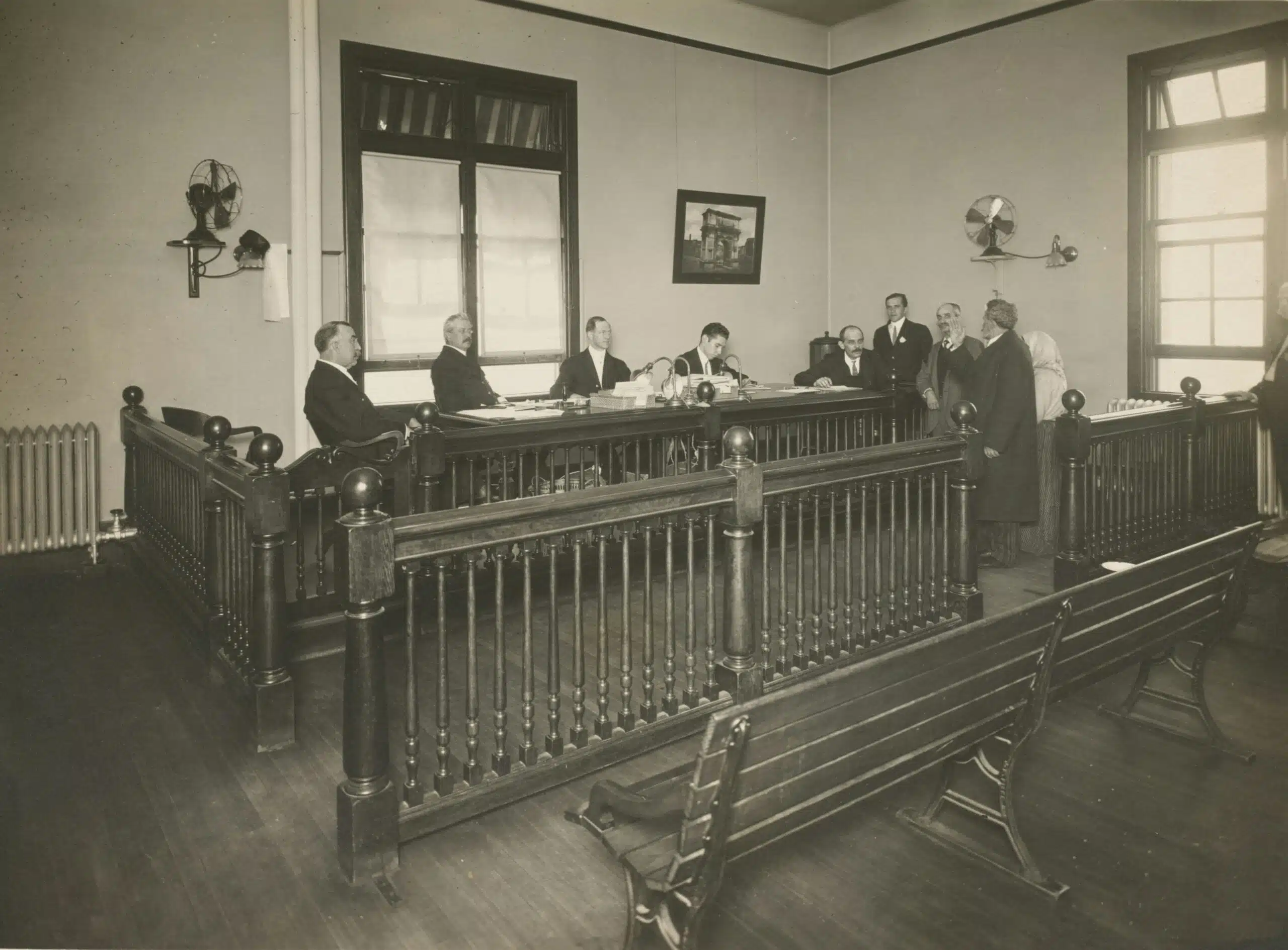
Under the Ancien Régime, lawyers did not carry their files in cardboard folders or leather briefcases as they do today. They used what were known as “trial bags” or “case bags”—large canvas bags in which they stored all the documents, supporting evidence, testimonies, and arguments pertaining to a legal case.
The storage system: These bags were stored in the court hallways, hung at a safe height on hooks, just like children’s coats in a kindergarten. Why so high up? To protect them from the rodents—rats and mice—that swarmed through the buildings at the time and might have gnawed on the precious documents.
The term “pending case”: It is this practice, in fact, that explains why we still refer to a “pending case” today when a court has been seized of the matter but the case has not yet been decided. The bag was literally hung up while awaiting the hearing!
The turning point: When the case was “in the bag,” it meant that the file was complete and all the necessary documents had been gathered. All the lawyers had to do was pull out the documents during the hearing to support their arguments. Success then became highly likely.
Language fun fact: This same origin also gave us the expression “vider son sac,” which means to speak your mind or reveal everything you know—just like a lawyer who empties his briefcase to lay out all the evidence in court.
On our French learning platform, you’ll discover hundreds of these powerful connections that make learning truly irresistible.
4. “To be in the coaltar”: a loanword from English
Contemporary meaning
To be "in a daze" means to be in a state of mental confusion, lethargy, or stupor. This expression is used when someone is half-awake, still groggy, or completely lost, confused, or bewildered.
Examples of everyday use:
- "Sorry, I'm totally out of it this morning—I only got three hours of sleep."
- “After that long flight, I was totally wiped out.”
- "Don't ask me anything complicated right now—I'm in the middle of something."
The expression describes a state in which thoughts are slowed down and responsiveness is reduced, as if the brain were running in slow motion.
Its English and industrial origins
A surprising linguistic discovery: this word comes from English! “Coaltar” is a loanword dating back to the mid-19th century, the era of the Industrial Revolution.
The etymology explains: The word is composed of “coal” and “tar.” It refers to a technical substance: a tar obtained by distilling bituminous coal.
Characteristics of coal tar: This substance is black, thick, viscous, sticky, and very difficult to remove once it comes into contact with a surface. It was used, in particular, to caulk ship hulls, waterproof certain surfaces, and in various industrial applications.
The visual metaphor: The image is powerful: when you’re “in the tar,” you’re as if stuck in this sticky substance. It’s impossible to get out easily; your movements are slowed down, and everything becomes a struggle. That’s exactly how it feels when you’re half-asleep or completely disoriented.
Spelling tip: The word is pronounced almost like “costard” (suit), but doesn’t have a final “d.” Many French speakers make this mistake because they’re unaware of the term’s English origin.
A typically French alternative: If you’re unsure how to spell “coaltar,” you can use the synonym “être dans le cirage,” a typically French expression that has the advantage of being spelled exactly as it’s pronounced and conveys the same sense of numbness and confusion.
This 19th-century expression perfectly illustrates how learning French also requires an understanding of foreign loanwords. It’s an exciting challenge that our expert teachers tackle every day with our students.
Exclusive opportunity: With TooFrench, get personalized guidance to master these nuances.
5. “All hands on deck”: maritime traditions
Current use
According to the definition in the Petit Larousse, “branle-bas de combat” originally referred to the preparations made on a warship in preparation for battle. Figuratively, the expression evokes the preparations made before an important event, conveying a sense of great commotion, urgency, and widespread activity.
Situations in which it is used:
- "It's all hands on deck at home—we're having 20 guests over tonight!"
- “The rush to get ready began as soon as the inspection was announced”
- “Before the exam, the whole school was in a flurry of activity.”
The expression suggests intense, sometimes chaotic activity, with everyone rushing about to prepare for a crucial event.
A Detailed History of Naval Origins
The verb “branler”: The word derives from the verb “branler,” which—contrary to popular belief—has no vulgar connotations in its original meaning. It means “to shake, to agitate, to tremble,” and conveys the idea of a movement that is both repetitive and of small amplitude, a regular back-and-forth motion.
Current uses of the original meaning:
- A convoy setting off (getting moving)
- Nod one's head (to nod in agreement, to give one's approval)
- An object that wobbles (that moves, that isn't stable)
The Evolution of the Word "Hammock": Through metonymy—that shift in meaning so common in the evolution of language—the term "branle" came to refer, in the 17th century, to the canvas hammock used as a bed by sailors aboard ships. These hammocks swayed gently with the motion of the ship, hence the name "branle."
The daily routine at sea: Every morning, the sailors would receive the order “all hands on deck” or simply “all hands.” They would then have to take down their hammocks, fold them neatly, and stow them away, then clean the decks so that the space would be clear and clean for the day’s work.
In combat situations: When the ship was under attack by an enemy, the situation became urgent and critical. Space had to be cleared very quickly to allow the gunners to maneuver, the soldiers to move about, and the crew to fight effectively. There was no time to waste: it was “all hands on deck”!
The intensity of the action: Imagine the scene: dozens of sailors rushing simultaneously to take down their hammocks, roll them up, stow them away, clear the decks, prepare the weapons, load the cannons… All amid extreme commotion, organized chaos, and the pressure of imminent danger. This powerful image explains why the expression is now used to describe any situation involving frantic preparation.
Understanding the origin of this expression is essential for anyone who truly wants to learn French and appreciate the richness of its maritime vocabulary!
Why learn these expressions with TooFrench?
Learning French is not just about memorizing grammar rules. It is a profound cultural and intellectual transformation. These idioms are essential for:
- Understanding the nuances of language: Every expression carries within it centuries of history and culture
- Communicating authentically: Using these phrases will help you express yourself like a native French speaker
- Ace Your Official Exams: Idiomatic Expressions Are Tested in French Exams (DELF, DALF, TCF)
- Develop true fluency: Mastering these phrases will greatly enhance your spoken and written expression
- Avoiding Embarrassing Mistakes: Understanding the Origins of These Phrases Helps You Spell and Use Them Correctly
TooFrench: Your go-to platform for learning French
Our French learning platform offers two powerful options tailored to your needs:
SELF-PACE PLAN: Learn at your own pace with innovative resources, interactive exercises, and a powerful learning system that supports you 24/7.
TUTORING PROGRAM: Receive personalized support from expert instructors who share your commitment toexcellence. Customized lessons, detailed feedback, and tailored advice.
Conclusion
Learning French with TooFrench means seizingthe opportunity to master a language rich in fascinating stories. These expressions, with their mysterious origins, are just a glimpse of the treasures our beautiful language holds.
Every idiom offers a window into history, culture, the trades of yesteryear, and maritime or legal traditions. By truly understanding them, you don’t just learn words—you immerse yourself in the soul of the French language.
Don’t miss this unique opportunity to join a French-language platform where students and teachers share a common vision ofexcellence!
Ready for your language transformation? Check out our SELF-STUDY and TUTORING options today and get ready to ace your official exams with confidence.
Source: Article “French Phrases Whose Origins Are Unknown” – Le Monde